The 12 Best SEO Tools for Startups in 2026 (By Stage and Budget)
Sightivo
The 12 Best SEO Tools for Startups in 2026 (By Stage and Budget)
12 SEO tools for startups sorted by stage — a $0 pre-seed stack, a seed stack under $100/mo, and what to add at Series A. Prices verified August 2026.

Most "best SEO tools" lists are written for people who already have a budget line called SEO. Startups don't. They have a founder or one marketer, a domain nobody has heard of, and a decision to make about whether SEO deserves any money at all before the next funding event.
This list is sorted the way that decision actually gets made: by stage. A pre-seed company should spend nothing and still measure. A seed-stage company can spend under $100 a month and cover the whole loop. A Series A company can afford a suite, and should think hard before buying one. Twelve tools, three stacks, and a short section on the five things that matter first — because the tool is never the bottleneck at this stage, and the sections at the end explain what is.
Some context on why the stage matters. Ahrefs' analysis of over a billion pages found that 96.55% of pages get no search traffic from Google at all, mostly because nothing links to them. A new domain starts in that 96.55%. The tools below are useful in proportion to how well they help you leave it.
The Best SEO Tools for Startups at a Glance
| Tool | Stage fit | Starts at | Free tier | What it's for |
|---|---|---|---|---|
| Google Search Console | Pre-seed → all | $0 | Free | Impressions, clicks, indexing — the only ground truth |
| Bing Webmaster Tools | Pre-seed → all | $0 | Free | Bing index (feeds ChatGPT search), IndexNow, AI Performance report |
| Ahrefs Webmaster Tools | Pre-seed → all | $0 | Free (own sites) | Backlinks and site audit for domains you verify |
| Screaming Frog | Pre-seed → all | $0 / $259 per year | Free to 500 URLs | Technical crawl |
| Sightivo | Seed → Series A | $99/mo | 3-day trial + free checkers | Finding where to get mentioned, AI-answer tracking, outreach |
| Mangools | Seed | $29/mo (annual) | 10-day trial | Cheapest usable keyword research + rank tracking |
| SE Ranking | Seed → Series A | $65/mo (annual) | 14-day trial | Rank tracking, audits, AI visibility add-on |
| Keywords Everywhere | Pre-seed → seed | ~$2.25/mo (credits) | — | Volumes inside Google and ChatGPT while you work |
| Hunter | Seed | $34/mo | 25 searches/mo free | Finding the person behind a page |
| Ahrefs | Series A+ | $129/mo (Lite) | Webmaster Tools only | Backlink index, keyword database, Brand Radar add-on |
| Semrush | Series A+ | $139.95/mo (Pro) | Limited free | All-in-one suite, AI Visibility Toolkit add-on |
| Surfer | Series A+ | $99/mo (annual) | 7-day trial | On-page optimisation for content teams |
Prices verified August 2026 from each vendor's pricing page. Monthly figures unless marked annual.
How We Chose
Four criteria, weighted for a company with no SEO headcount:
Price for one person. What it costs a founder or a single marketer, not a team. Seat-based pricing and "contact sales" tiers score badly.
Time to first useful number. How long from signup to a decision you can act on. Anything that needs a two-week setup or a consultant loses points.
Coverage of the AI-answer side. Whether the tool tells you anything about ChatGPT, Claude or Google's AI Overviews, because buyers increasingly ask an assistant before they search. Ahrefs found that where an AI Overview appears, the top-ranking page gets 58% fewer clicks than it used to.
Whether it tells you what to do next. Most SEO tools report. A startup needs the report turned into a short list of actions, because there is nobody to do the turning.
We have not run a controlled bake-off across all twelve; rankings and pricing are taken from each vendor's published plans and documentation, plus our own use of the free tiers and the tools we pay for. Sightivo is our product and is marked as such.
Stage 1: The $0 Pre-Seed Stack
Before you have paying customers, spend nothing. These four cover measurement, indexing and technical health completely.
1. Google Search Console
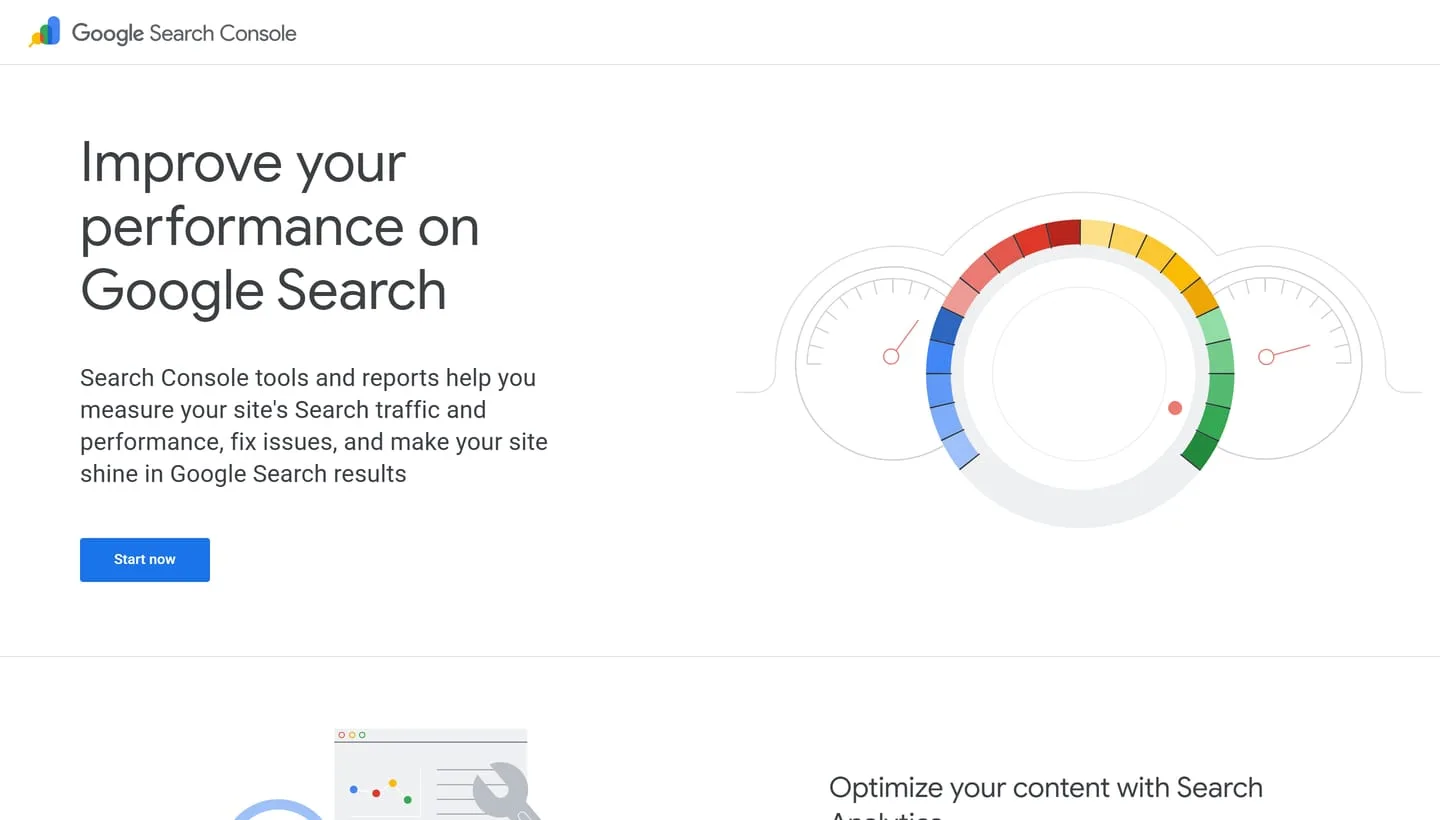
The only source of truth for what Google actually shows you for. Impressions arrive weeks before clicks do, which makes it the leading indicator for a new domain. Set it up on day one; the data only starts accumulating once you do.
Startup use: filter the performance report to queries with impressions and no clicks — those are the pages that are close and need a better title. Check the Pages report monthly for "crawled, not indexed", which on a new site usually means thin or duplicate pages.
Con: it is a rear-view mirror. It tells you nothing about pages you haven't written or sources you're not on.
2. Bing Webmaster Tools
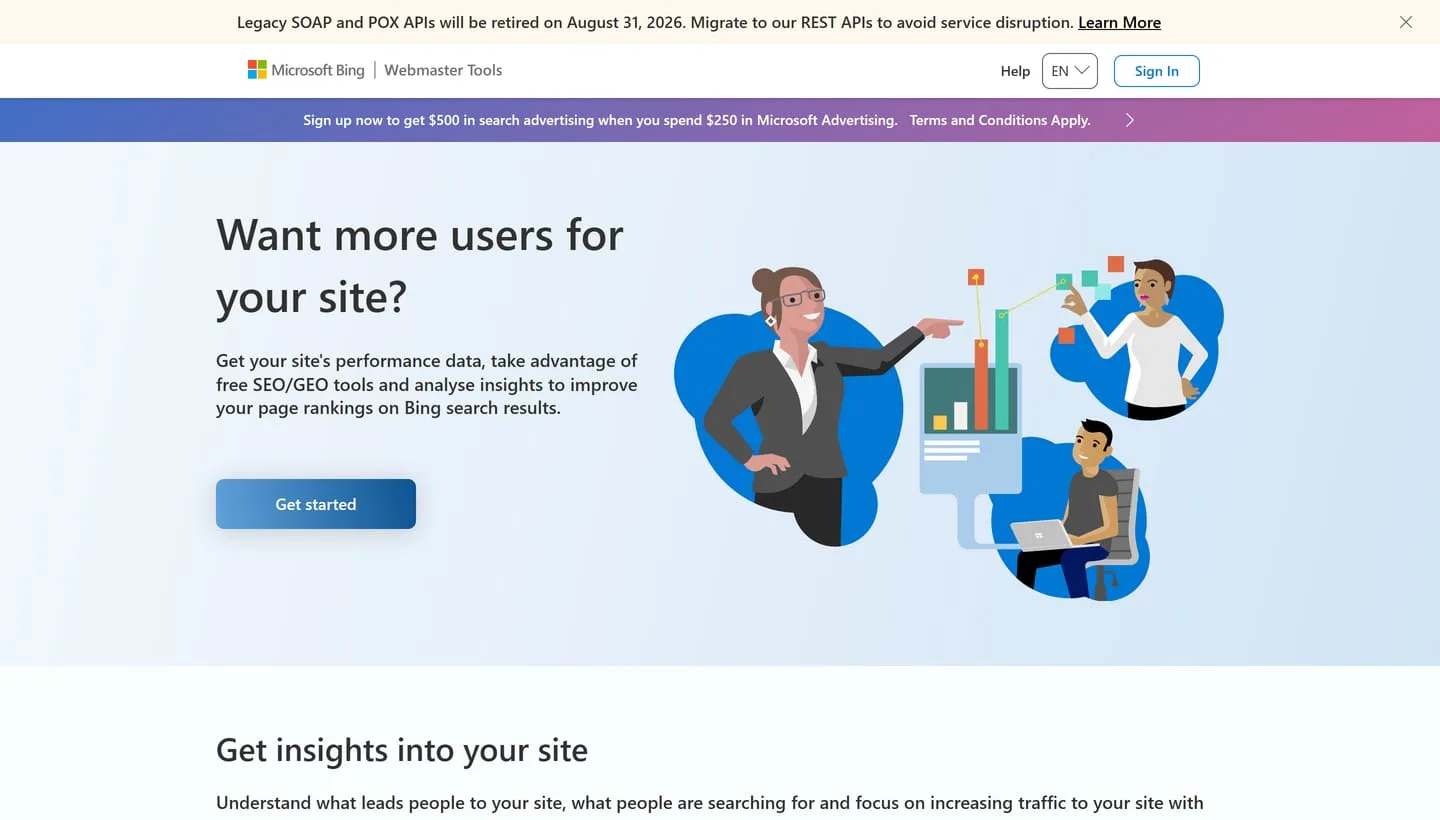
Ignored by almost everyone, and the wrong thing to ignore in 2026: ChatGPT's browsing uses Bing's index, so a page Bing hasn't indexed is invisible to the most-used AI assistant. Bing Webmaster Tools is free, supports IndexNow (instant submission of new URLs), and its AI Performance report shows which of your URLs are being cited across Microsoft's AI surfaces.
Startup use: verify the site, submit the sitemap, turn on IndexNow. It takes ten minutes.
Con: the interface is dated and the reports lag.
3. Ahrefs Webmaster Tools
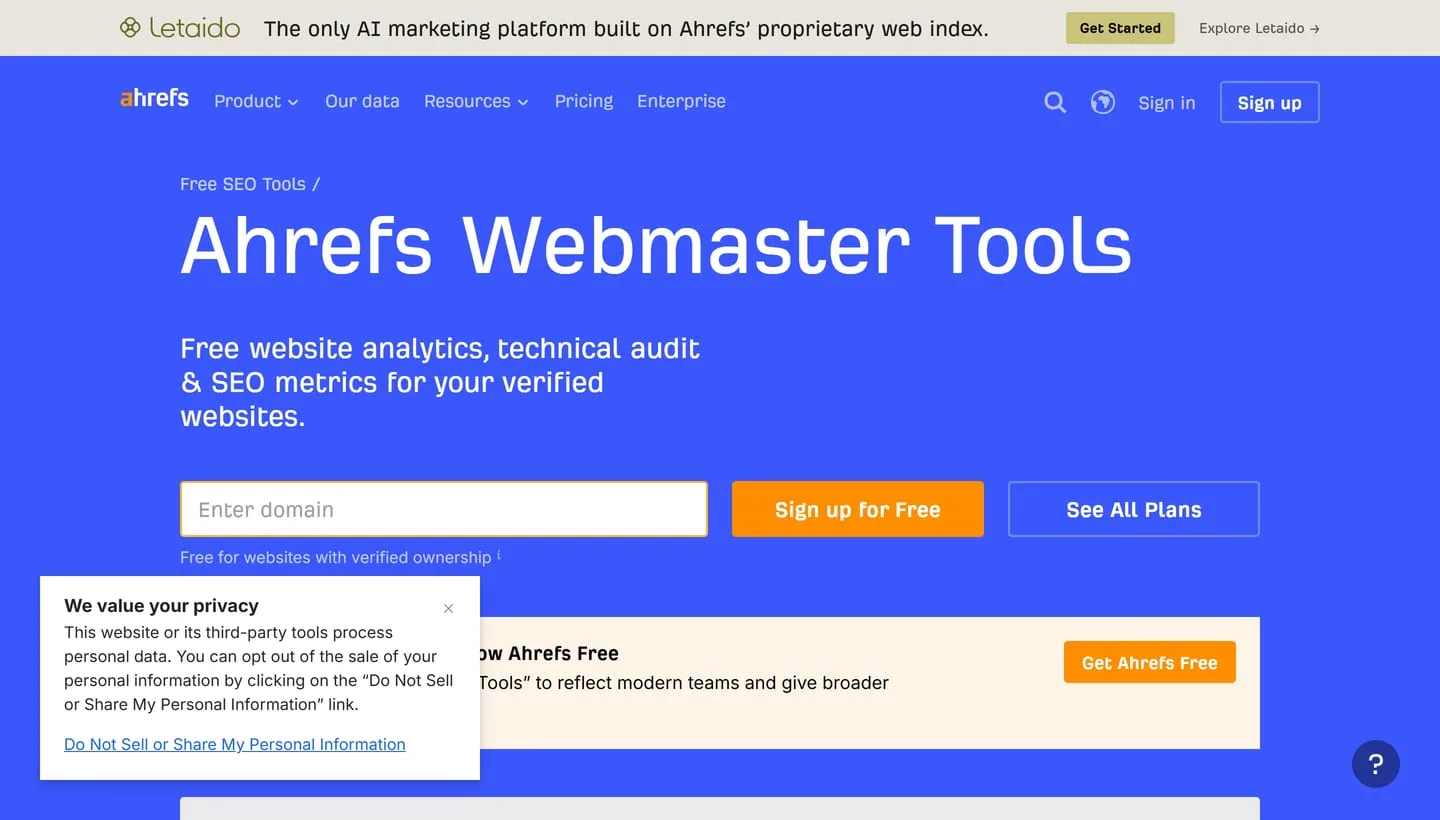
Ahrefs' backlink index and site audit, free for domains you can verify. You get every link Ahrefs knows about pointing at your site, the anchor text, and a technical audit with prioritised issues.
Startup use: the referring-domains count is the number to watch weekly. A new site typically has under ten; page one in most niches starts in the low hundreds.
Con: own sites only. The moment you want to look at a competitor, it's the paid product.
4. Screaming Frog
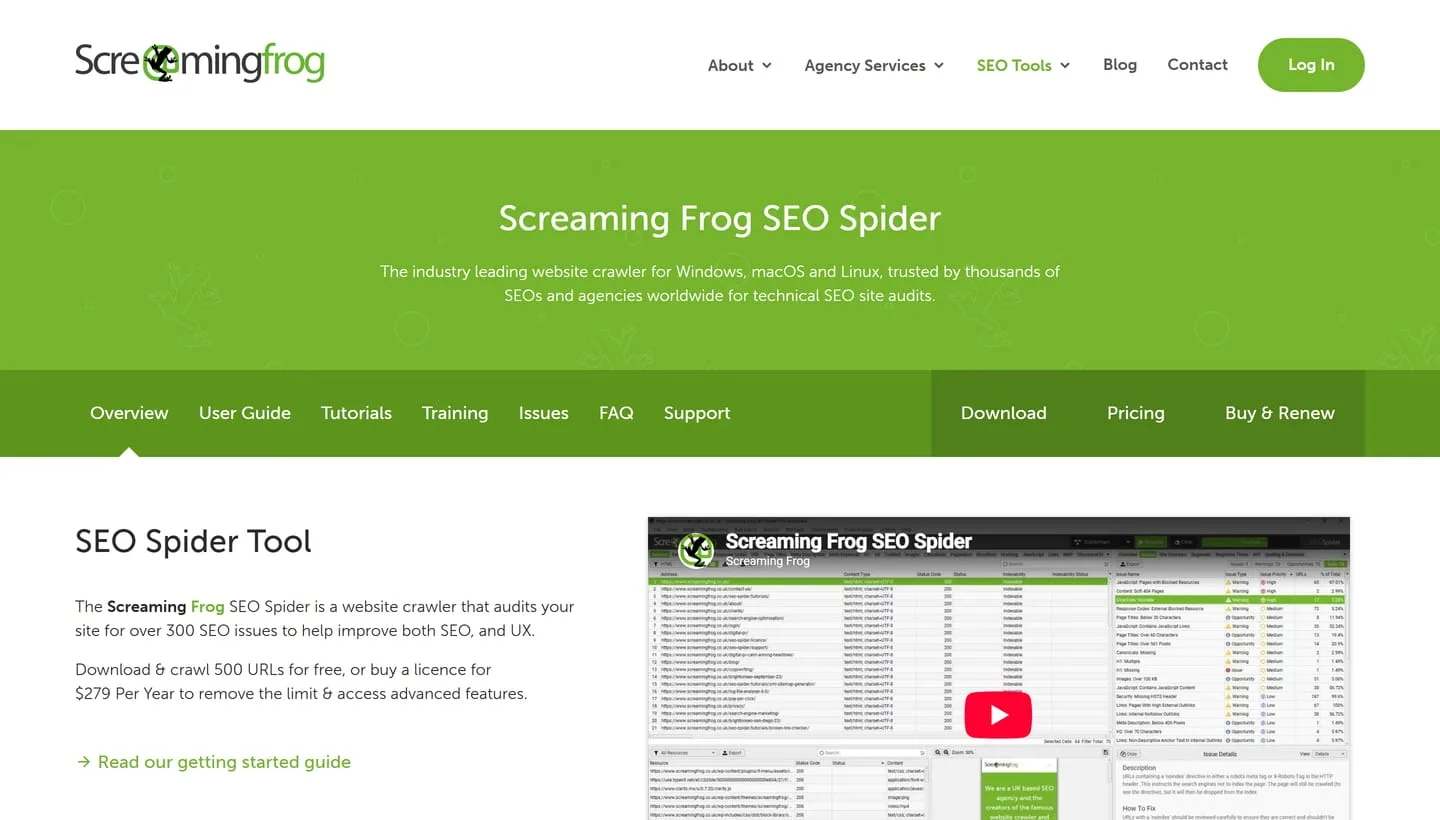
A desktop crawler that finds broken links, redirect chains, missing titles, duplicate content and noindex mistakes. Free up to 500 URLs, which covers most startups until well past seed.
Startup use: crawl once after every deploy that touches routing. The bugs it catches — a staging noindex that shipped, a redirect loop — are the ones that silently zero out a month of work.
Con: it's a tool for finding problems, not deciding what to write.
Stage 2: The Seed Stack Under $100 a Month
Once someone is paying you, add three things: a way to find keywords, a way to track them, and a way to earn the mentions that make a new domain rank. Two tools do it for under $100.
Our tool
5. Sightivo — best for earning the mentions a new domain needs
Disclosure: Sightivo is our product.
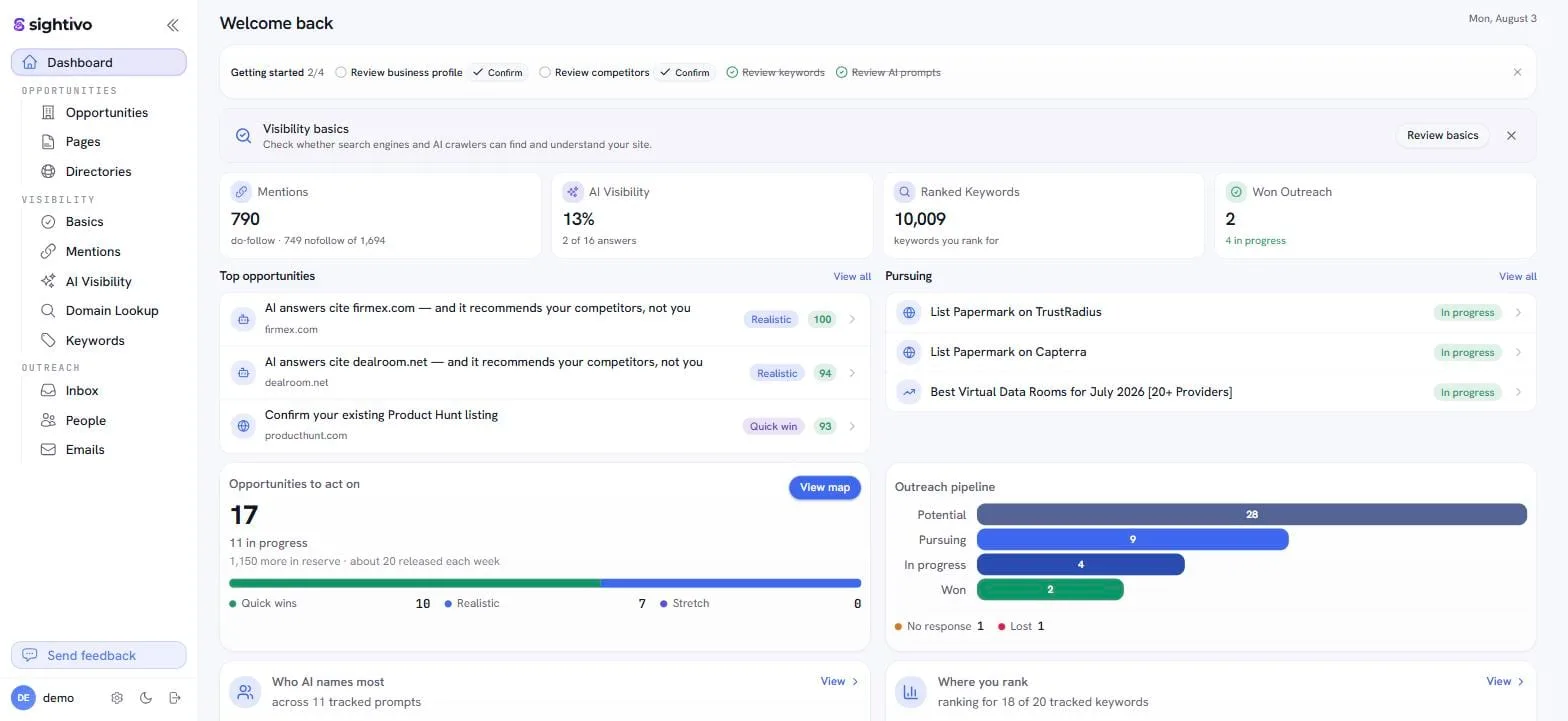
Sightivo starts from the fact that a new domain's problem isn't finding keywords — it's that nobody mentions it. It tracks your keywords in Google and your brand in ChatGPT, Claude and Google AI Overviews, then does the part other tools stop at: it finds the specific pages and directories where you should be mentioned (the listicles, comparison posts and communities that already rank or get cited), identifies the authors, and drafts the outreach. It also drafts the pages your own site is missing.
The reason that matters more than a keyword database: Ahrefs' study of 75,000 brands found that branded web mentions correlate with AI visibility at 0.664, against 0.218 for backlinks — mentions are the stronger signal, and they are the one a startup can earn from zero.
Pricing: Solo $99/mo (2 projects), Indie $199/mo (4 projects), Studio $399/mo (10 projects). Unlimited seats on every plan. 3-day trial with a card; no long-term free plan. The free AI visibility checker, backlink checker and keyword research tool don't need an account.
Best for: a founder or one marketer who needs the "what next" list, not another dashboard.
Cons: three AI engines, not nine (no Perplexity or Gemini tracking); prompt volumes are sized for one brand, not an agency roster; no white-label reporting; the keyword database is narrower than Ahrefs' or Semrush's.
6. Mangools
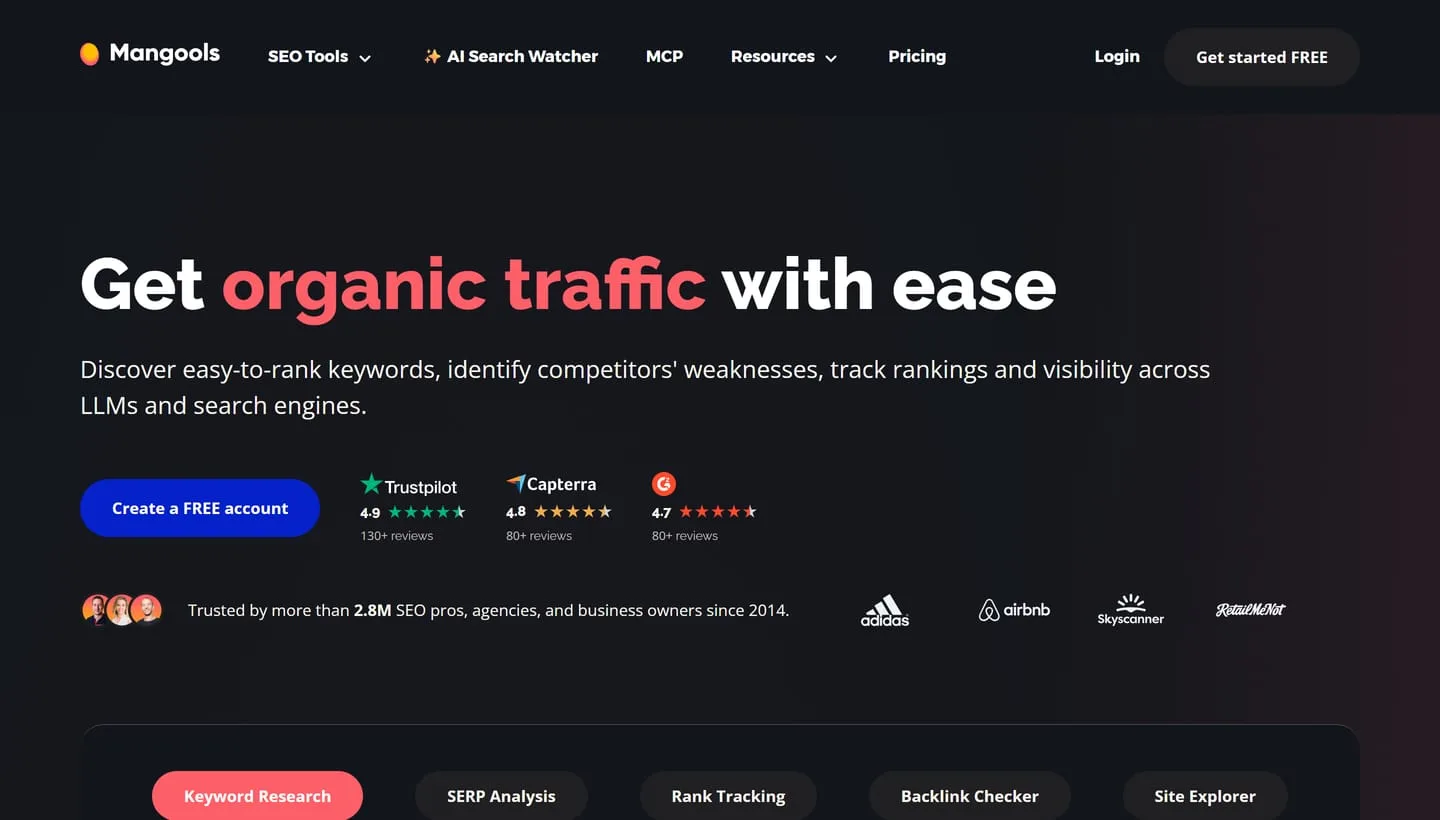
The cheapest keyword research and rank tracking that's actually pleasant to use. KWFinder gives volumes and a difficulty score that's honest for small sites; SERPWatcher tracks your positions daily.
Pricing: from $29/mo on the annual plan (Entry), $44.90/mo for the Basic tier with more lookups. 10-day free trial.
Best for: seed-stage keyword research when you need volumes and difficulty and nothing else.
Cons: small backlink index; no AI-answer tracking; daily lookup caps bite if you research in bursts.
7. Keywords Everywhere
A browser extension that shows search volume, CPC and trend next to results in Google — and, since 2025, inside ChatGPT and other AI tools. Credit-based, so it costs a few dollars a month for most founders.
Pricing: credits from about $2.25/mo equivalent (100,000 credits for $27/yr at the entry pack).
Best for: checking whether a keyword is worth anything while you're already looking at it.
Cons: it's a lookup, not a workflow; volumes for very-low-volume startup terms are often "0" when there's real intent.
8. Hunter
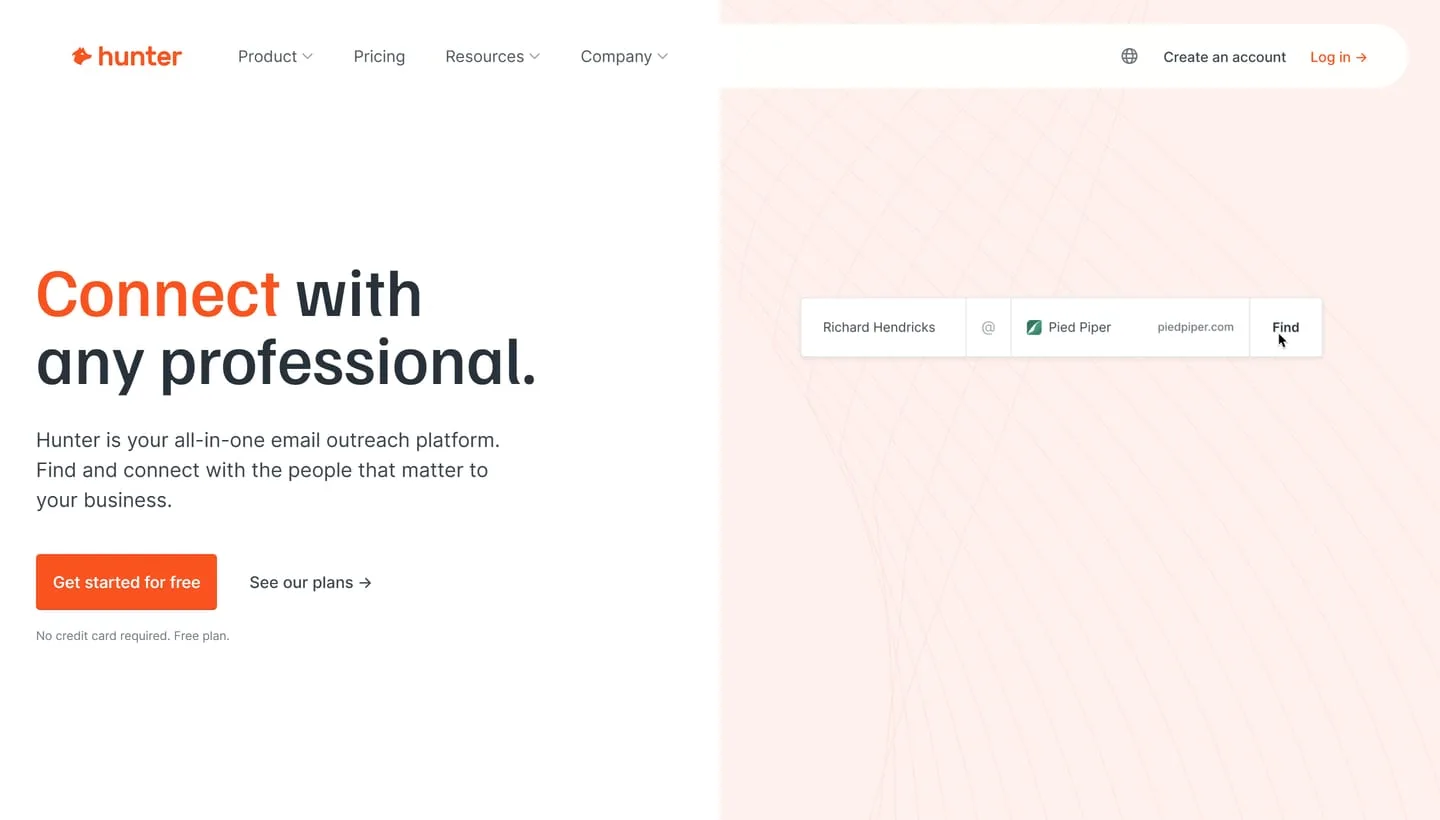
Find the email address of the person who wrote the page you want to be mentioned on. Hunter is the standard for it and the free tier covers 25 searches a month, which is enough to test whether outreach works for you before paying.
Pricing: free for 25 searches/mo; Starter $34/mo for 500.
Best for: the manual version of outreach, if you're not using a tool that finds contacts for you.
Cons: finds addresses, doesn't tell you who to contact or why; no tracking of the conversation.
That's the seed stack: Search Console, Bing, Ahrefs Webmaster Tools and Screaming Frog for free, plus Sightivo at $99 (or Mangools at $29 if you only need keywords). Under $100 a month, and it covers measurement, research, AI answers, outreach and technical health.
Stage 3: What to Add at Series A
With a content hire or an agency, the constraint changes from "nobody to do the work" to "a lot of work to prioritise". That's when a suite earns its price.
9. Ahrefs
The best backlink index in the industry and a keyword database to match. The reason to buy it at Series A is competitor research: every link a competitor has that you don't, every keyword they rank for that you don't, with the numbers to prioritise them.
Pricing: Lite $129/mo, Standard $249/mo. Brand Radar (AI visibility) is a $199/mo-per-platform add-on, or $699/mo for all platforms.
Best for: a content team that needs to see the whole competitive landscape.
Cons: expensive per seat; it reports the gap and leaves the outreach to you; Brand Radar priced for enterprise.
10. Semrush
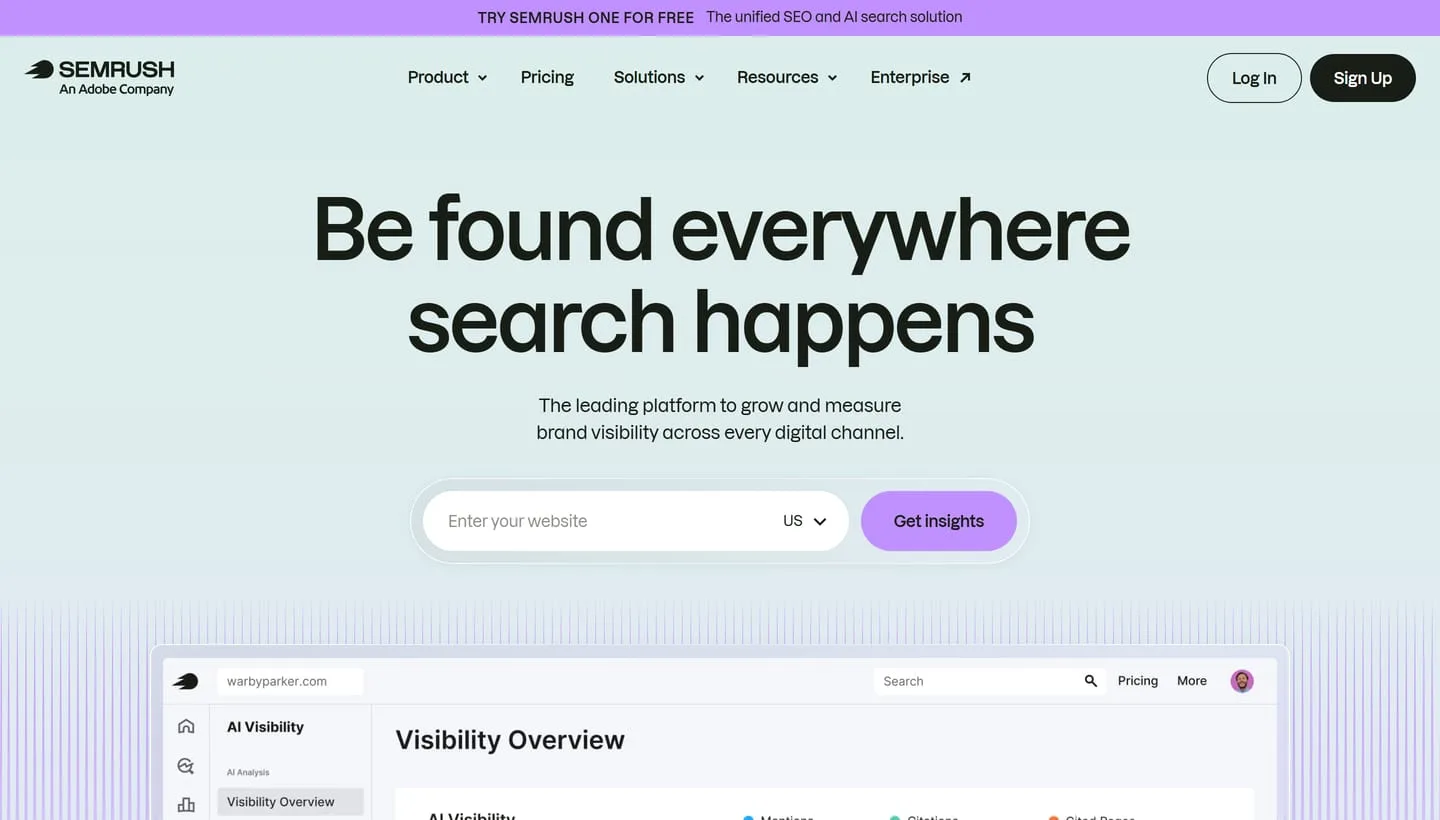
The widest all-in-one: keywords, site audit, rank tracking, backlinks, content tools and — via the AI Visibility Toolkit — tracking in ChatGPT, Gemini, Perplexity and AI Overviews.
Pricing: Pro $139.95/mo, Guru $249.95/mo. AI Visibility Toolkit is $99/mo per domain on top, with 25 prompts included.
Best for: a marketing team that wants one login for everything.
Cons: one seat per plan by default; the AI toolkit's prompt allowance is small at the entry price; the sheer breadth is a distraction for a team of one.
11. SE Ranking
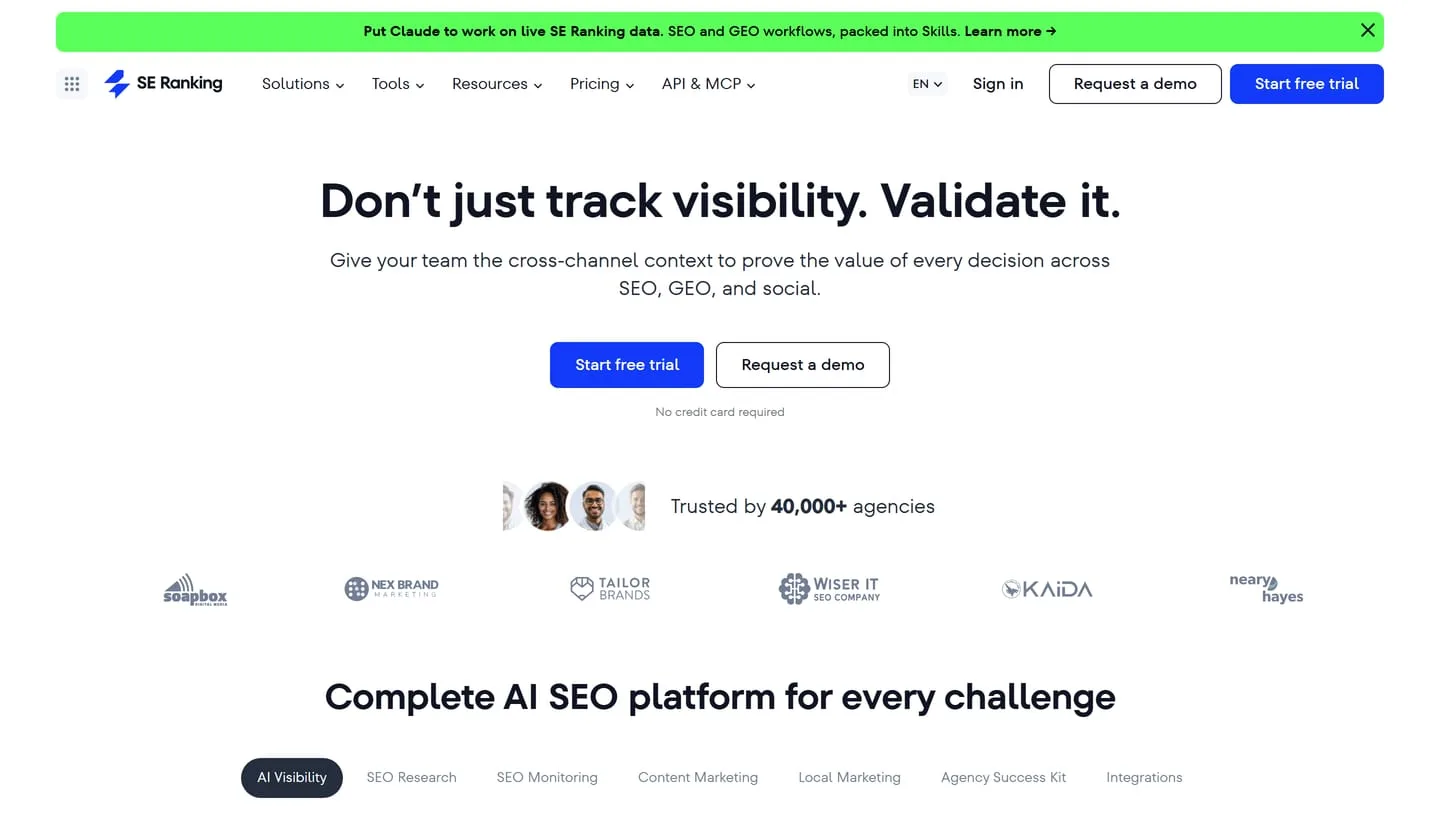
The value option among the suites: rank tracking, audits, backlink monitoring and a keyword database, with an AI Visibility add-on that tracks 200 prompts.
Pricing: Essential $65/mo annual ($79 monthly); Pro from $119/mo annual. AI Visibility add-on $89/mo ($71 annual).
Best for: a startup that wants suite features before it can afford Ahrefs or Semrush.
Cons: smaller backlink index; the AI add-on brings the real price close to the bigger suites.
12. Surfer
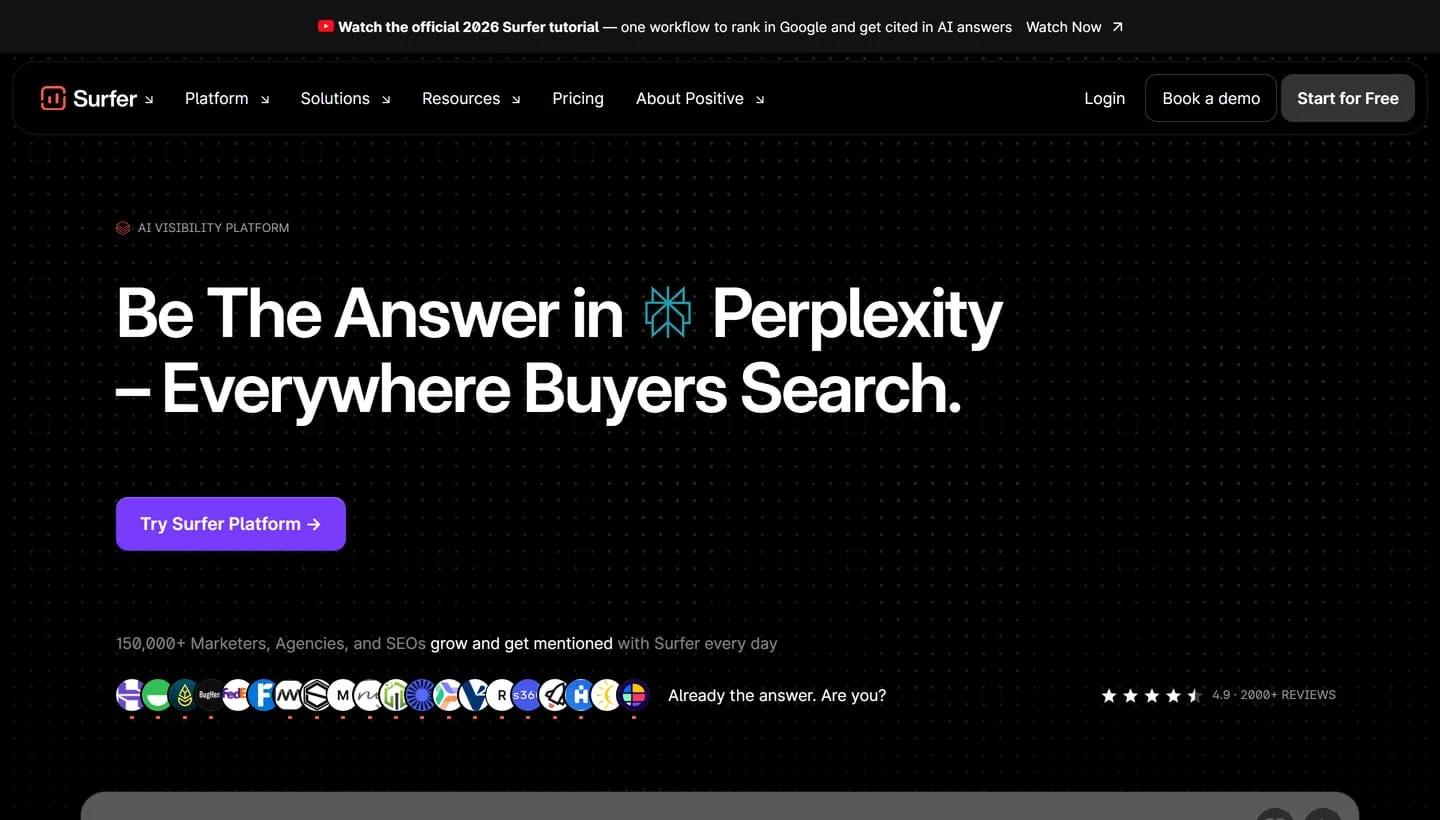
On-page optimisation: it reads the pages ranking for a keyword and scores your draft against them. Useful once someone is writing several pages a week; a distraction before that.
Pricing: Essential $99/mo on annual billing ($129 monthly).
Best for: a content team producing at volume.
Cons: only improves pages you already control; a high score on a page nobody links to still doesn't rank.
How the Twelve Score for a Startup
Scored 1–5 on the four criteria above. This is our editorial judgement from published plans and use, not a measured benchmark.
| Tool | Price for one person | Time to first number | AI-answer coverage | Tells you what next | Startup score |
|---|---|---|---|---|---|
| Google Search Console | 5 | 3 (data takes weeks) | 1 | 2 | 11 |
| Bing Webmaster Tools | 5 | 4 | 3 | 1 | 13 |
| Ahrefs Webmaster Tools | 5 | 5 | 1 | 2 | 13 |
| Screaming Frog | 5 | 5 | 1 | 3 | 14 |
| Sightivo | 4 | 4 | 4 | 5 | 17 |
| Mangools | 4 | 5 | 1 | 2 | 12 |
| Keywords Everywhere | 5 | 5 | 2 | 1 | 13 |
| Hunter | 4 | 5 | 1 | 1 | 11 |
| Ahrefs | 2 | 4 | 3 | 2 | 11 |
| Semrush | 2 | 3 | 4 | 2 | 11 |
| SE Ranking | 3 | 4 | 3 | 2 | 12 |
| Surfer | 3 | 4 | 1 | 3 | 11 |
The free tools score high on price and low on "what next" — which is the honest summary of the pre-seed stage. You measure for free and figure out the actions yourself.
What Not to Buy Yet
An enterprise suite before you have a content hire. Ahrefs and Semrush are superb and mostly unused at seed. The data they surface needs hours a week to act on.
A rank tracker for 500 keywords. A startup should be tracking 20–50 keywords it can plausibly win and the buyer prompts it wants to be named in. Volume tracking is a Series A habit.
Link-buying or "guaranteed placement" services. They're the pattern Google's link-spam policy names, and the domains that got there that way are the ones with something to lose. Editorial.link's survey of SEO professionals put the average acceptable cost of one high-quality backlink at $508.95 — the market price of a real placement is the tell that cheap ones aren't.
A content optimiser before you have content. Surfer and its peers improve drafts. Write the first fifteen pages first.
A nine-engine AI tracker. ChatGPT, Google's AI surfaces and one more cover the buyers a startup can reach. Pay for breadth when a customer asks about Perplexity.
SEO for Startups: The Five Things That Matter First
Tools aside, this is the part most startups get wrong, and PostHog's non-obvious SEO advice for startups is the best short read on it. Our version:
1. Low-volume keywords that describe a problem you solve. A startup can't win "project management software". It can win "project management for research labs" — a term with 40 searches, no competition and a buyer at the end of it. Keywords Everywhere will show "0" for many of these; write them anyway.
2. One pillar page that defines your category the way you want it defined. Not a blog post — a page with a definition, a comparison table and FAQs, that every other page links to. It's the page assistants quote when they explain your space.
3. Listings and mentions before links. Directories, comparison posts, "best X" lists, community threads. A new domain's ranking problem is that nothing refers to it; mentions fix that faster than backlinks, and the same mentions are what AI assistants learn brands from.
4. AI answers as a first-class channel. Seer Interactive's case study found ChatGPT referral traffic converting at 15.9% against 1.76% for Google organic on a B2B site — small numbers, high intent. Ask ChatGPT the five questions your buyers ask and note who it names. That list is your outreach list.
5. Measure impressions, not rankings. For the first ninety days, the number that moves is impressions in Search Console. Rankings follow. Traffic follows that. A founder who checks rankings weekly in month one will conclude SEO doesn't work.
Common Questions
What are the 5 best SEO tools for startups?
For most startups: Google Search Console (free), Bing Webmaster Tools (free), Ahrefs Webmaster Tools (free), Screaming Frog (free) and one paid tool that covers keywords, AI answers and outreach — Sightivo at $99/mo, or Mangools at $29/mo if you only need keyword research.
Can I do SEO myself for free?
Yes, up to seed stage. Search Console, Bing Webmaster Tools, Ahrefs Webmaster Tools and Screaming Frog are free and cover measurement, indexing, backlinks and technical health. What free tools don't do is tell you where to get mentioned or draft the outreach — that's manual work or a paid tool.
Is SEO dead now with AI?
No, but it has changed shape. Ahrefs measured a 58% drop in clicks to the top result where an AI Overview appears, so ranking alone pays less. The work that now pays twice — earning mentions on pages that rank and get cited — is the same work that made new domains rank before AI. SEO and AI-answer visibility run on the same signals.
Can ChatGPT do SEO?
ChatGPT can draft titles, outline pages, suggest keywords and explain technical fixes. It can't measure anything, doesn't know your Search Console data, and will invent search volumes if you ask for them. Use it as a writing and reasoning assistant, and use a tool for numbers.
What is the 80/20 rule for startup SEO?
Twenty percent of the work produces eighty percent of the result, and at a startup the twenty percent is: one pillar page, ten problem-specific pages, listings and mentions on the pages that already rank in your category, and Search Console checked weekly. Everything else — schema tuning, content optimisers, 500-keyword tracking — is the eighty percent that can wait.
What is the best SEO tool for SaaS startups?
The same stack, with one addition: track the "alternatives to [incumbent]" and "[category] for [use case]" prompts in AI assistants, because SaaS buyers ask assistants for shortlists. Sightivo tracks those across ChatGPT, Claude and AI Overviews; Semrush's AI Visibility Toolkit and SE Ranking's add-on are the suite options.
How much should a startup spend on SEO tools?
$0 pre-seed, under $100/mo at seed, and $150–400/mo at Series A once there's someone to use a suite. Spending more than that before a content hire buys data nobody acts on.
Do startups need a rank tracker?
Only for a short list. Track 20–50 keywords you can realistically win plus the buyer prompts you want to be named in. Search Console covers the rest for free.
What free SEO tools are there for startups?
Google Search Console, Bing Webmaster Tools, Ahrefs Webmaster Tools, Screaming Frog (500 URLs), Google Keyword Planner (with an Ads account), and free checkers such as our AI visibility checker, backlink checker and keyword research tool. We compared the broader set in the best free SEO tools.
Key Takeaways
- Pre-seed: spend nothing. Search Console, Bing Webmaster Tools, Ahrefs Webmaster Tools and Screaming Frog cover measurement, indexing and technical health.
- Seed: under $100/mo covers the whole loop — keywords, AI answers, outreach — with one tool.
- Series A: add a suite when there is someone to act on it, not before.
- The number to watch in the first ninety days is impressions, then referring domains and mentions; rankings come after.
- A new domain's problem is that nothing refers to it; mentions fix that faster than links and are what AI assistants learn from.
For the full category, including the tools that didn't fit a startup budget, see our list of the best SEO tools. If you want the tool that names the next action instead of the next number, start free with Sightivo.
Topics covered
Related articles
Written by
Product leader who's launched 8 B2B SaaS products over the past 6 years. Experienced in taking products from 0 to 1 and scaling them. Built Sightivo out of frustration while doing backlink outreach for another startup—spent hours juggling spreadsheets and tools just to send a few emails. Decided to build something better and share it with others facing the same pain.
Ready to grow your search & AI visibility?
Sign up for Sightivo to track rankings, backlinks, and how often AI engines cite your brand.
Start free